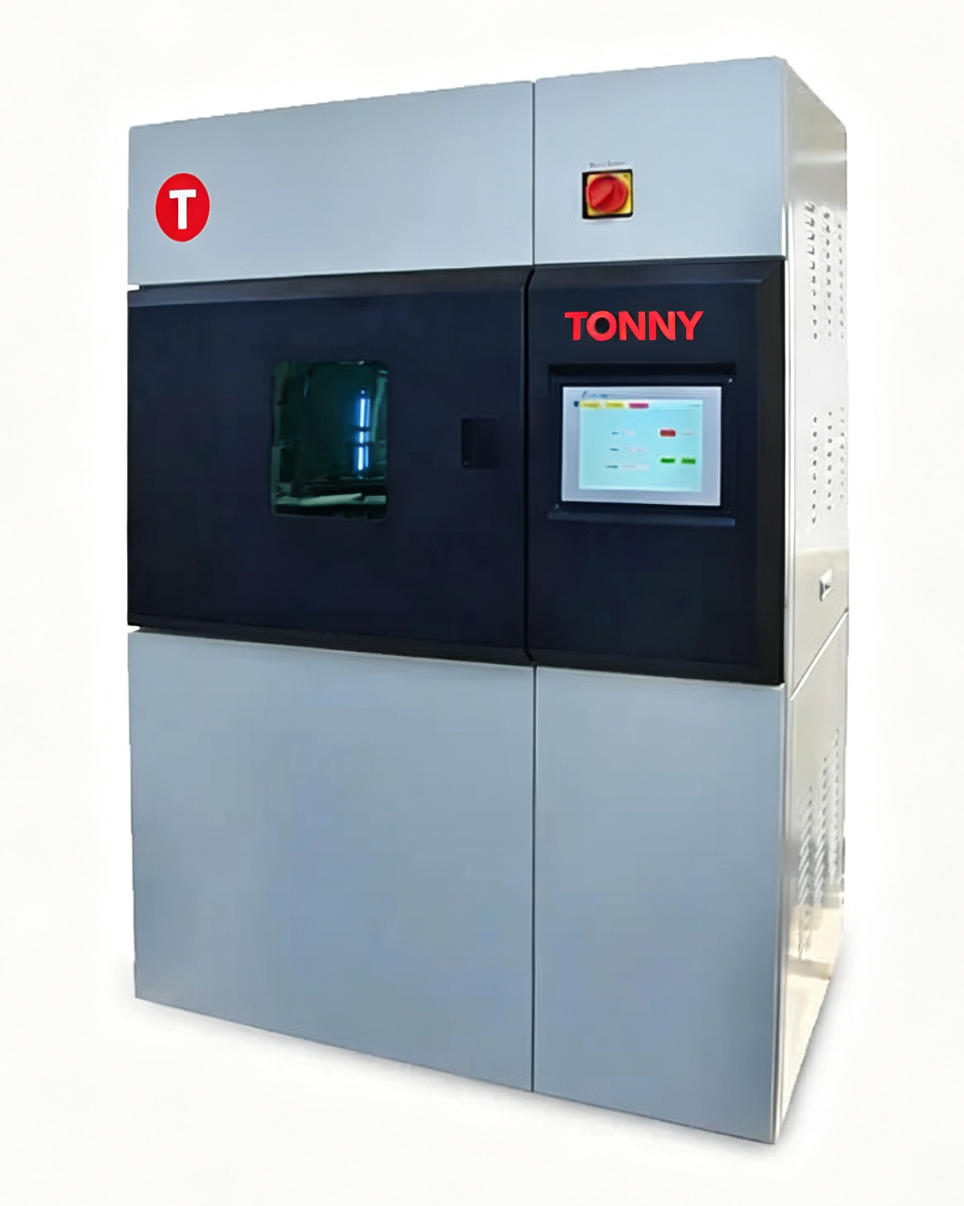
 Water-cooled Light Fastness Tester
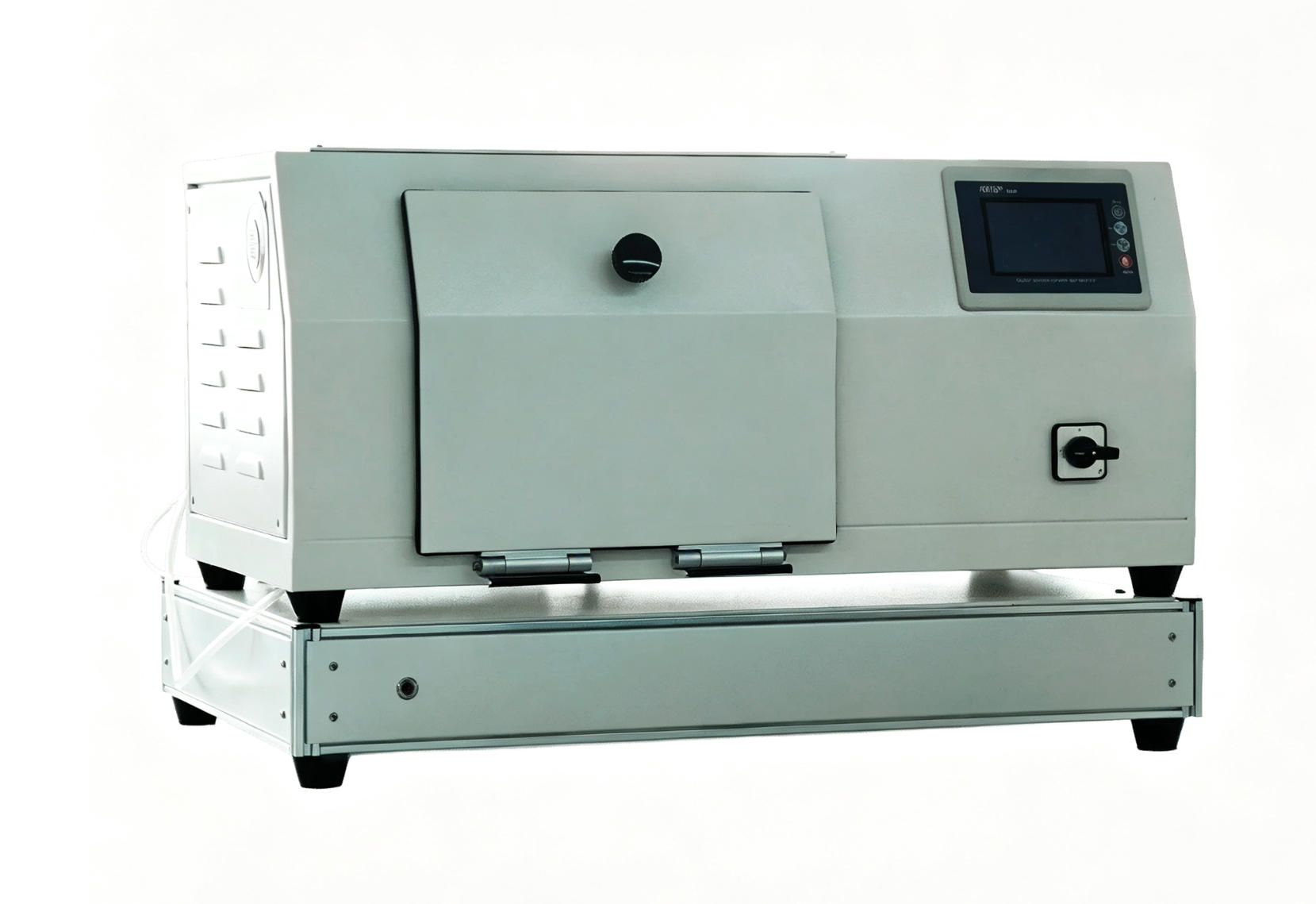
TNG1038
Tabletop Light Fastness Tester - TNG1038
The TNG1038 measures color fastness to light for textiles. It is used to evaluate how colors resist fading under simulated sunlight exposure.
- Specifications
- 13
- Methods
- 0
- Images
- 5
- Supply
- Inquiry only
Inquiry only. No prices are published.
Product overview
The TNG1038 is designed to assess the light fastness of textile materials by simulating sunlight exposure. The instrument uses a xenon lamp to replicate natural sunlight conditions. During testing, specimens are placed alongside AATCC blue wool standards (L2-L9) and covered with an opaque material in a specified proportion. Exposure continues until the color change of the specimen or the blue wool standards matches a specific level on the AATCC color gray card. The test follows ISO 105-B02:2014 Methods 3 & 4 and GB/T 8427 Method 3 and 4. The TNG1038 features a specimen holder that accommodates samples with an exposure area of 200 x 280 mm. It includes a microprocessor control system with an LCD display for monitoring cumulative light energy and exposure time. The unit has dimensions of 800 mm in length, 500 mm in width, and 470 mm in height. The instrument is suitable for testing a variety of textile materials, including cotton, woven fabrics, and knitted fabrics.
Application
Testing Principle
Colorfastness to light is the firmness degree to which the color of textiles is under the exposition of sunlight or simulated sunlight. The test of color fastness to light: arrange the sample with a set of blue wool standards samples (8 pieces) in a prescribed manner at first. Then cover a part of the specimen and the blue standard sample with an opaque covering in the prescribed proportion.
Expose the samples under specified conditions such as not being exposed to rain, etc. When the color difference between the exposed and unexposed parts of the sample is equal to a certain level of the discoloration gray card, or the color change of the specified blue standard sample is equivalent to a certain level of the discoloration gray card, stop the sun exposure. Finally, remove the cover, and place the sample and the blue standard sample in the dark for 4H. Then we can evaluate the colorfastness level of the textile with the specified light source.
Technical description
- Record the use time of the xenon lamp.
- Specimen table with 200 x 280 mm exposure area.
- Setting and displaying the cumulate light energy and exposure time.
- Microprocessor control with large LCD displays data and irradiance wave-length curve.
- Air-cooled xenon lamp with 1.5 KW measure, irradiance (420 nm): 1.1 W/m²/nm.
- Measure and control the temperature relative humidity of the test chamber, and display it on a large LCD.
- Length: 800 mm
- Width: 500 mm
- Height: 470 mm
- ISO 105-B02: 2014 Methods 3 & 4
- GB/T 8427 Method 3 and 4
Working principle
Colorfastness to light is the firmness degree to which the color of textiles is under the exposition of sunlight or simulated sunlight. The test of color fastness to light: arrange the sample with a set of blue wool standards samples (8 pieces) in a prescribed manner at first. Then cover a part of the specimen and the blue standard sample with an opaque covering in the prescribed proportion. Expose the samples under specified conditions such as not being exposed to rain, etc.
Test method notes
The factors affecting the sunlight fastness of the material 1 the structure of dyes Generally speaking, anthraquinone dyes and phthalocyanine dyes have relatively strong sunlight fastness. Besides, most insoluble azo dyes also have higher sun fastness while aniline-typed azo has weak sun fastness. And triarylmethane is not sun resistant. 2 the type of fiber There is also a great difference between the same dye but made of diverse fibers. For example, indigo in wool can be resistant to sunlight while the sunlight fastness on cellulose is very low. 3 the dye concentration The sun fastness of the same dye in the same variety of fibers will change with changes in dye concentration. Generally speaking, the dye with low concentration has a higher fastness than that with low concentration, especially for the azo dyes.
Specifications
| Standard Accessories | Optional Accessories |
|---|---|
| Specimen holder | AATCC blue wool specimen L2-L9 |
| Filters | AATCC color gray card |
| Xenon lamp | Xenon lamp |
| 50 kg | — |
| 220 V | 50 Hz |
| Length: 800 mm | Width: 500 mm |
| ISO 105-B02: 2014 Methods 3 & 4 | GB/T 8427 Method 3 and 4 |
| Weight | 50 kg |
| Length | 800 mm |
| Width | 500 mm |
| Height | 470 mm |
| ISO 105-B02 | 2014 Methods 3 & 4 |
Related instruments
Why request a quotation from TONNY
Founded in 2012 with a 60-person design and assembly team and worldwide supply. No prices are published and no registration is required to read a specification.
Tell us what you need to test.
Send the test method and the material. We will match the model, attach its specification table and reply with a written quotation - no prices published, no registration.