 Water-cooled Light Fastness Tester
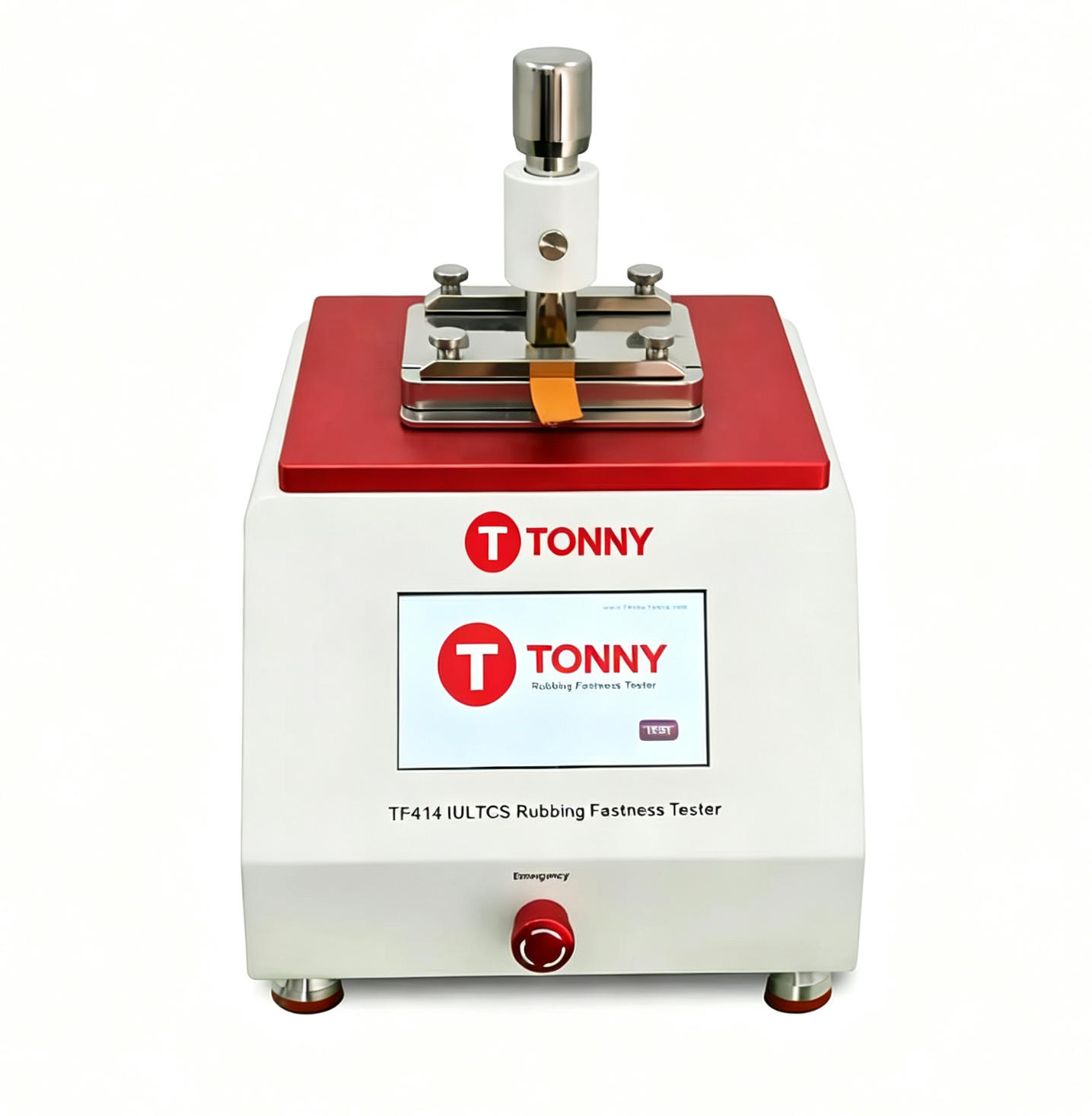
TNG1030
IULTCS Rubbing Fastness Tester - TNG1030
The TNG1030 measures color fastness to rubbing. It is used to assess color transfer from a sample to a rubbing pad under dry or wet conditions.
- Specifications
- 14
- Methods
- 1
- Images
- 5
- Supply
- Inquiry only
Inquiry only. No prices are published.
Product overview
The TNG1030 is designed to perform a rubbing fastness test on the surface of leather. It determines the amount of 'marring' of the leather surface or finish and evaluates color transfer from the sample to the rubbing pad under dry or wet conditions. The instrument operates by applying a controlled rubbing action to the specimen, simulating real-world wear. The rubbing finger applies a force of 500 +/- 25 g, which can be increased to 1000g by adding a load mass. The specimen dimensions are 120x20mm, and the rubbing stroke is between 35 to 40 mm. The rubbing speed is set at 40 +/- 2 cycles per minute. The built-in counter records up to 1-999,999 cycles and automatically stops. The TNG1030 complies with EN 344 and ISO 11640 (ISO 17700 Method A). It is suitable for testing materials such as leather and other textiles where color fastness to rubbing is a critical quality parameter. The instrument's design ensures reliable and stable test results.
Application
IULTCS Rubbing Fastness Tester, designed to carry out a rub fastness test on the surface of leather to determine the amount of ‘marring’ of the leather surface or the finish and to assess the amount of colour transferring from the sample to the rubbing pad under dry or wet conditions.
The unique design of IULTCS Rubbing Fastness Tester allows reliable and stable test result.
Impact appearance and construction design offers a good shape and convenient operation, also allows a long life time without repairing.
Available with a piece of 500g loading weight, thus allows a test with 500g or 1000g loading.
Equipped with an extension device so samples can be extended at a required rate.
Two models of single and double test position are offered.
Technical description
- Rubbing finger: 500 +/- 25 g(or 1000g by adding a load mass)
- Loading weight: 500 +/- 10 g
- Specimen: 120x20mm
- Rubbing stroke: 35 ~ 40 mm
- Speed of rubbing: 40 +/- 2 cycles/min
- Counter: 1-999,999 times, automatically stops
- Optional order
- White Rubbing wool felts 1000pcs / pack
- Black Rubbing wool felts 1000pcs / pack
- Length: 320 mm
- Width: 380 mm
- Height: 500 mm
- ISO 17700 Method A
Test method notes
Test Principle Use a prescribed felt to perform a reciprocating friction test on one surface of the leather under the specified pressure, and test the specified number of times. Compare the color changes of felt surface and leather surface with gray sample card to determine the grade and record any visible change or damage to the leather surface. The instrument is suitable for all kinds of leather. Test Steps (Standard QB / T 2537) 1 Cut the sample according to the standard, and adjust it. 2 Fix the air-conditioned specimen on the test table and draw 10% along the friction direction. If the specimen cannot stretch 10%, stretch the specimen to the maximum allowable elongation. If the sample is not stable during friction after 10% elongation, continue to stretch the specimen until the specimen cannot be elongated. Record the above two cases in the test report.
Specifications
| 25 kg | — |
|---|---|
| 220/110 V | 50/60 Hz |
| Length: 320 mm | Width: 380 mm |
| ISO 11640 | ISO 17700 Method A |
| Rubbing finger | 500 +/- 25 g(or 1000g by adding a load mass) |
| Loading weight | 500 +/- 10 g |
| Specimen | 120x20mm |
| Rubbing stroke | 35 ~ 40 mm |
| Speed of rubbing | 40 +/- 2 cycles/min |
| Counter | 1-999,999 times, automatically stops |
| Weight | 25 kg |
| Length | 320 mm |
| Width | 380 mm |
| Height | 500 mm |
Test standards supported
Each standard is matched to the instruments that support it.
Related instruments
Why request a quotation from TONNY
Founded in 2012 with a 60-person design and assembly team and worldwide supply. No prices are published and no registration is required to read a specification.
Tell us what you need to test.
Send the test method and the material. We will match the model, attach its specification table and reply with a written quotation - no prices published, no registration.