 DeMattia Flexing Tester
TNG1084
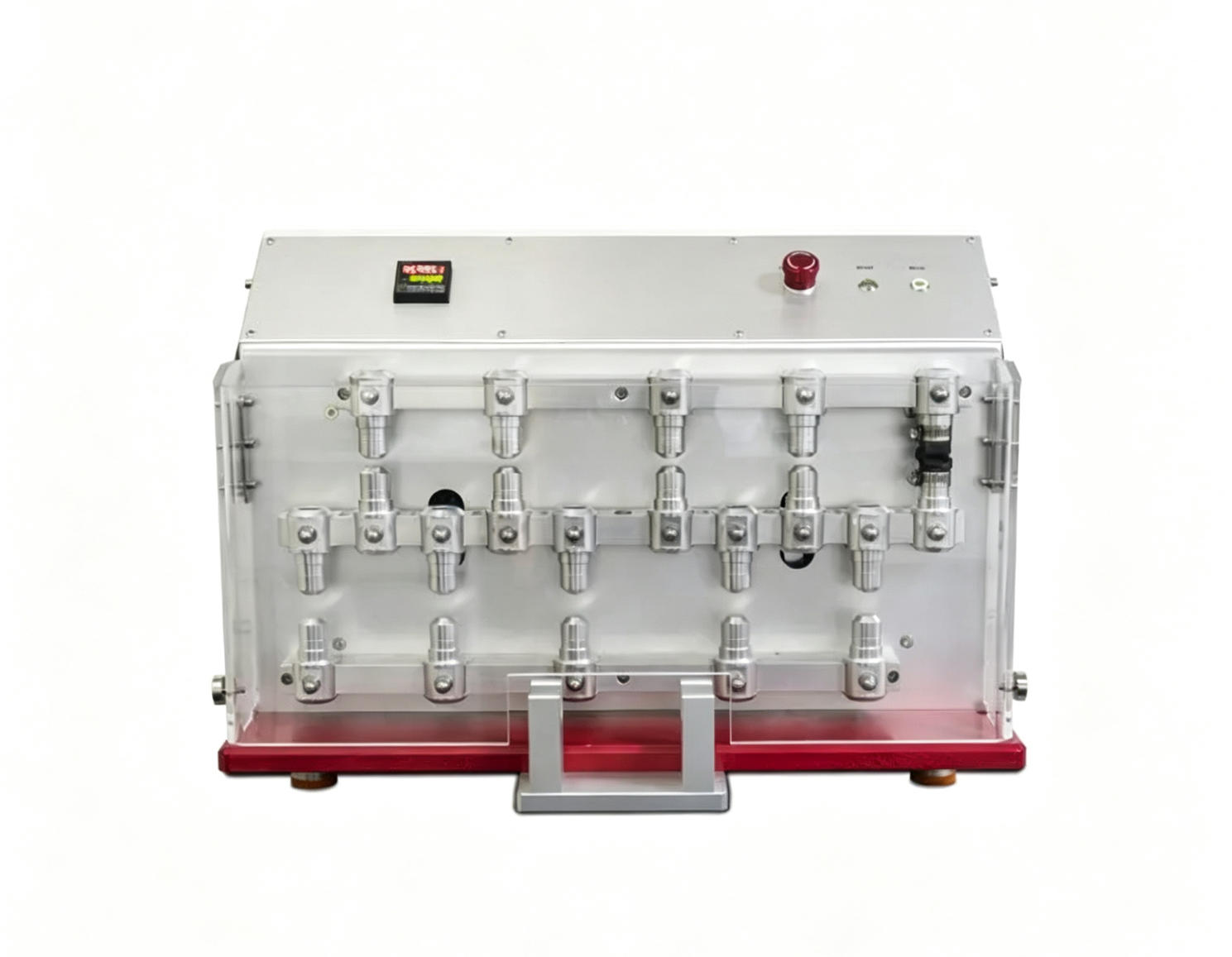
Schildknecht Flexing Tester - TNG1084
The TNG1084 Schildknecht Flexing Tester measures the resistance of coated fabrics to damage caused by flexing under oscillation. It is commonly used in quality control and material testing laboratories for evaluating fabric durability.
- Specifications
- 15
- Methods
- 4
- Images
- 5
- Supply
- Inquiry only
Inquiry only. No prices are published.
Product overview
The TNG1084 Schildknecht Flexing Tester is designed to assess the resistance of coated fabrics to damage resulting from flexing due to oscillation at 500 cycles per minute. The instrument accommodates up to 10 specimens and features a resettable electronic counter that records the number of cycles. It complies with EN 14325, GB/T 12586 Method B, ISO 7854 Method B, and EN ISO 7854 Method B. The tester operates on 220 V, 50 Hz power supply. The stroke length is 11.7 ± 0.35 mm, with a cylinder external diameter of 25.4 ± 0.1 mm. The tool clips have a width of 10 ± 1 mm. The device is suitable for testing materials such as coated fabrics, and its design ensures accurate and repeatable results under standardized conditions.
Technical description
- EN14325, EN ISO 7854 Method B, ISO 7854 Method B, GB/T 12586 Method B
- 220 V, 50 Hz
- 360 mm x 490 mm x 280 mm
- What is Schildknecht flexing tester?
- Schildknecht Flexing Tester is designed to determine the resistance of coated fabrics to damage by flexing due to oscillation at 500 times per minute. Accommodates 10 specimens, provided with a resettable electronic counter to record number of cycles.
- How does the Schildknecht flexing tester work?
- This test method describes Schildknecht flexing of assessing the resistance of coated fabrics to damage by repeated flexing. Mount a rectangular strip of coated fabric on two opposing cylinders so that the test piece takes a cylindrical shape. One of the cylinders makes a reciprocating movement along its axis, causing the coated fabric to be alternately compressed and relaxed. After certain cycles, the specimen is flexing. This flexing test of the coated fabric reaches a pre-determined number of cycles or until the specimen appears broken.
- Test procedure
- Cut six specimens (105mm*50mm) from the coated fabric according to ISO 1420, and condition the specimens according to ISO 2231.
- Fix the specimen on the apparatus, and start the apparatus. After a specified number of cycles, or after a break in the coated fabric, stop the instrument and examine the specimen.
- Analysis of flexing damage
Specifications
| Work Stations | 10 |
|---|---|
| Stroke Length | 11.7 ± 0.35 mm |
| Cylinder External Dia | 25.4 ± 0.1 mm |
| Tool Clips | 10 ± 1 mm wide |
| Counter | 1 ~ 999,999 |
| Model | — |
| Standards | EN14325, EN ISO 7854 Method B, ISO 7854 Method B, GB/T 12586 Method B |
| Power | 220 V, 50 Hz |
| Weight | 150 Kg |
| Dimensions | 360 mm x 490 mm x 280 mm |
| Work Stations | 10 |
| Stroke Length | 11.7 ± 0.35 mm |
| Cylinder External Dia | 25.4 ± 0.1 mm |
| Tool Clips | 10 ± 1 mm wide |
| Counter | 1 ~ 999,999 |
Test standards supported
Each standard is matched to the instruments that support it.
Related instruments
Why request a quotation from TONNY
Founded in 2012 with a 60-person design and assembly team and worldwide supply. No prices are published and no registration is required to read a specification.
Tell us what you need to test.
Send the test method and the material. We will match the model, attach its specification table and reply with a written quotation - no prices published, no registration.