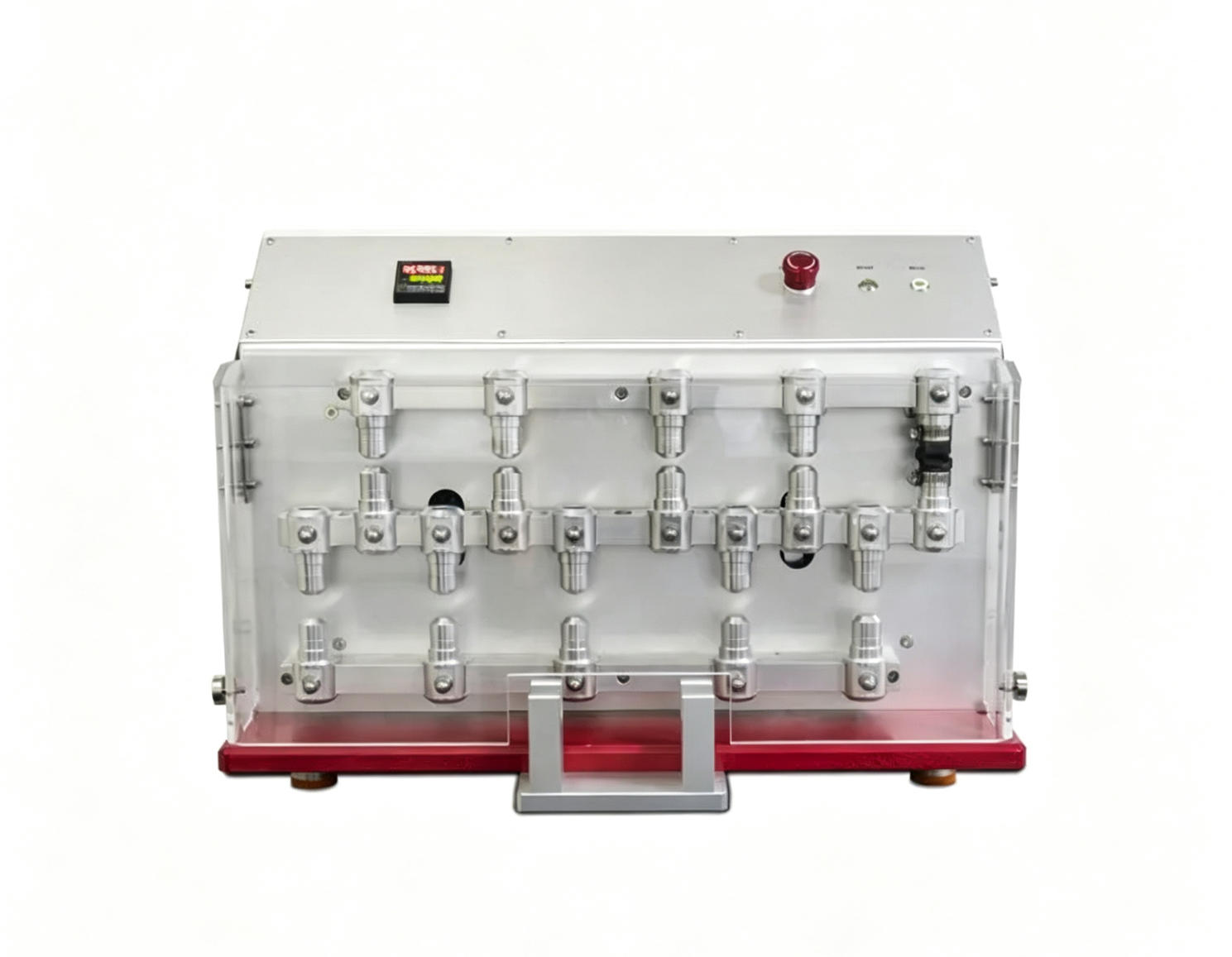
 Schildknecht Flexing Tester
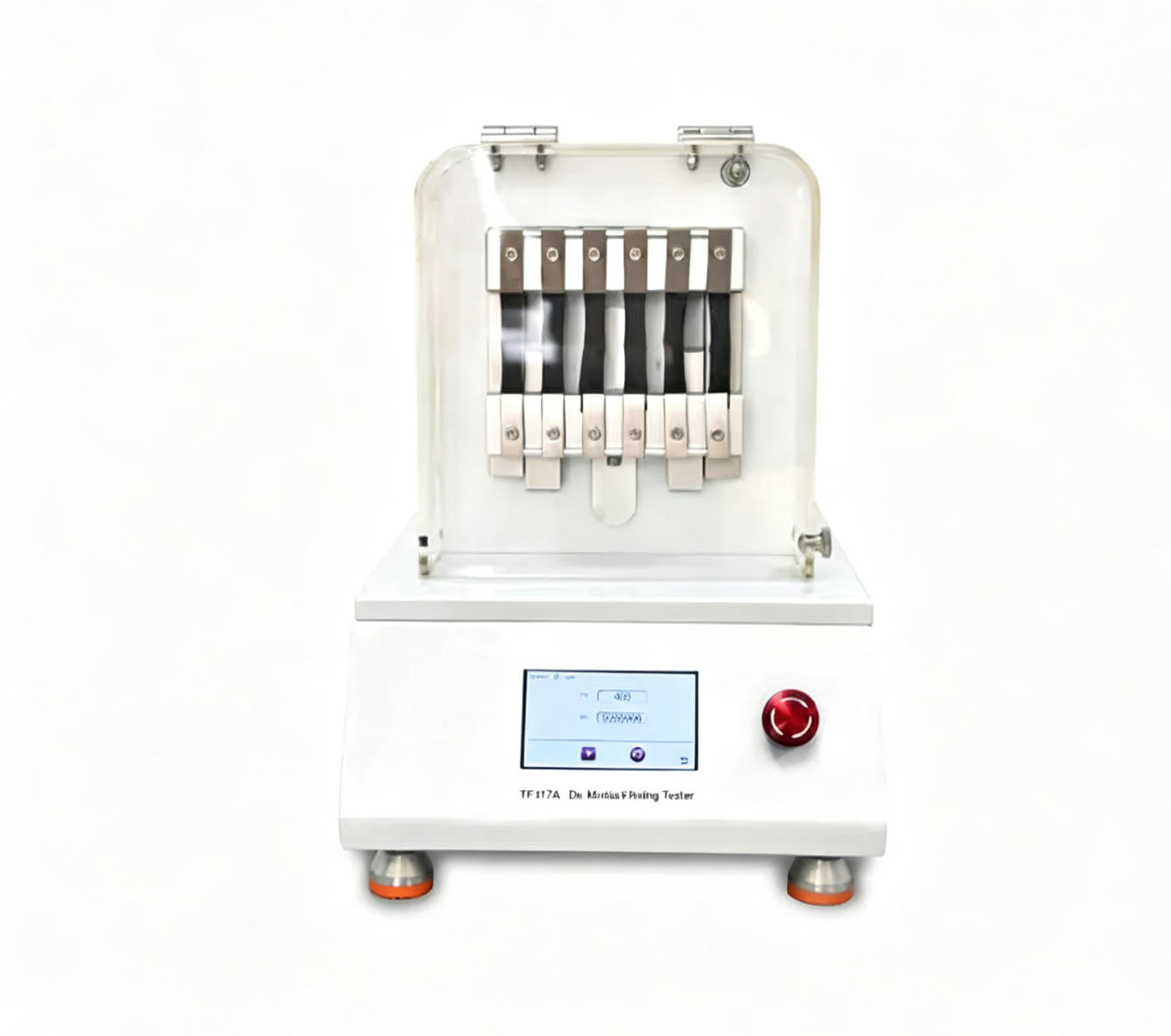
TNG1082
DeMattia Flexing Tester - TNG1082
The TNG1082 measures the flexing resistance of rubber, leather, and coated fabrics. It is used to assess the formation and growth of cracks under repeated flexing conditions.
- Specifications
- 16
- Methods
- 3
- Images
- 5
- Supply
- Inquiry only
Inquiry only. No prices are published.
Product overview
The TNG1082 is designed to evaluate the resistance of materials to damage caused by repeated flexing. The instrument operates by clamping a specimen between two grips and subjecting it to continuous flexing motion. This process simulates real-world conditions where materials are exposed to repetitive bending, allowing for the observation of crack formation and propagation. The test is applicable to rubber, leather, and coated fabrics, which are commonly used in industrial and consumer products. The TNG1082 supports GB/T 12586 Method A and EN ISO 7854 Method A, which are standardized procedures for determining flexing resistance. These standards specify the conditions and procedures for assessing the durability of materials under flexing stress. The test results provide quantitative data on the number of flexing cycles a material can withstand before showing signs of degradation, which is essential for quality control and material selection. The instrument is powered by 220/110 V, 50/60 Hz and has dimensions of 450 mm x 530 mm x 500 mm.
Technical description
- EN ISO 7854 Method A, ISO 7854 Method A, GB/T 12586 Method A
- 220/110 V, 50/60 Hz
- 450 mm x 530 mm x 500mm
- What is the flexing resistance test?
- Flexing resistance refers to the degradation or even destruction of the physical properties of a material or product under repeated flexing action. In flexing testing of rubber and coated fabrics, flexing resistance is usually expressed in terms of the number of times a specimen has been subjected to repeated flexing and the degree of surface cracking.
- Test standards for flexing resistance of rubber and coated fabrics
- ISO 7854: Rubber or plastics coated fabrics – Determination of resistance to damage by flexing
- GB/T 12586: Rubber or plastics coated fabrics – Determinaiton the flexing resistance to damage
- Scope: This international standard describes three methods of assessing the resistance of rubber or coated fabrics to damage by repeated flexing.
- Method A: Demattia Flexing Method
- Method B: Schildknecht Flexing Method
- Method C: Crumple Flexing Method
- How to test the flex resistance of rubber or coated fabrics?
- Fold a rectangular strip of coated fabric twice so that its long edges meet to form a 125 mm * 12.5 mm strip. Mount this folded strip between a pair of flat clamps. One of the clamps reciprocates, causing the folded test piece to bend outwards five times per second. This high-speed folding of the test piece is continued for either a pre-set number of cycles or until damage to the test piece is apparent.
Specifications
| Specimens 6 groups | — |
|---|---|
| Grips Distance in open position 70 mm | — |
| Grips Distance in close position 13 mm | — |
| Stroke length 57 mm | — |
| Test frequency 300 cpm | — |
| Counter 1 ~ 9999 | — |
| Model | — |
| Standards | EN ISO 7854 Method A, ISO 7854 Method A, GB/T 12586 Method A |
| Power | 220/110 V, 50/60 Hz |
| Weight | 88 Kg |
| Dimensions | 450 mm x 530 mm x 500mm |
| ISO 7854 | Rubber or plastics coated fabrics – Determination of resistance to damage by flexing |
| GB/T 12586 | Rubber or plastics coated fabrics – Determinaiton the flexing resistance to damage |
| Method A | Demattia Flexing Method |
| Method B | Schildknecht Flexing Method |
| Method C | Crumple Flexing Method |
Test standards supported
Each standard is matched to the instruments that support it.
Related instruments
Schildknecht Flexing Tester
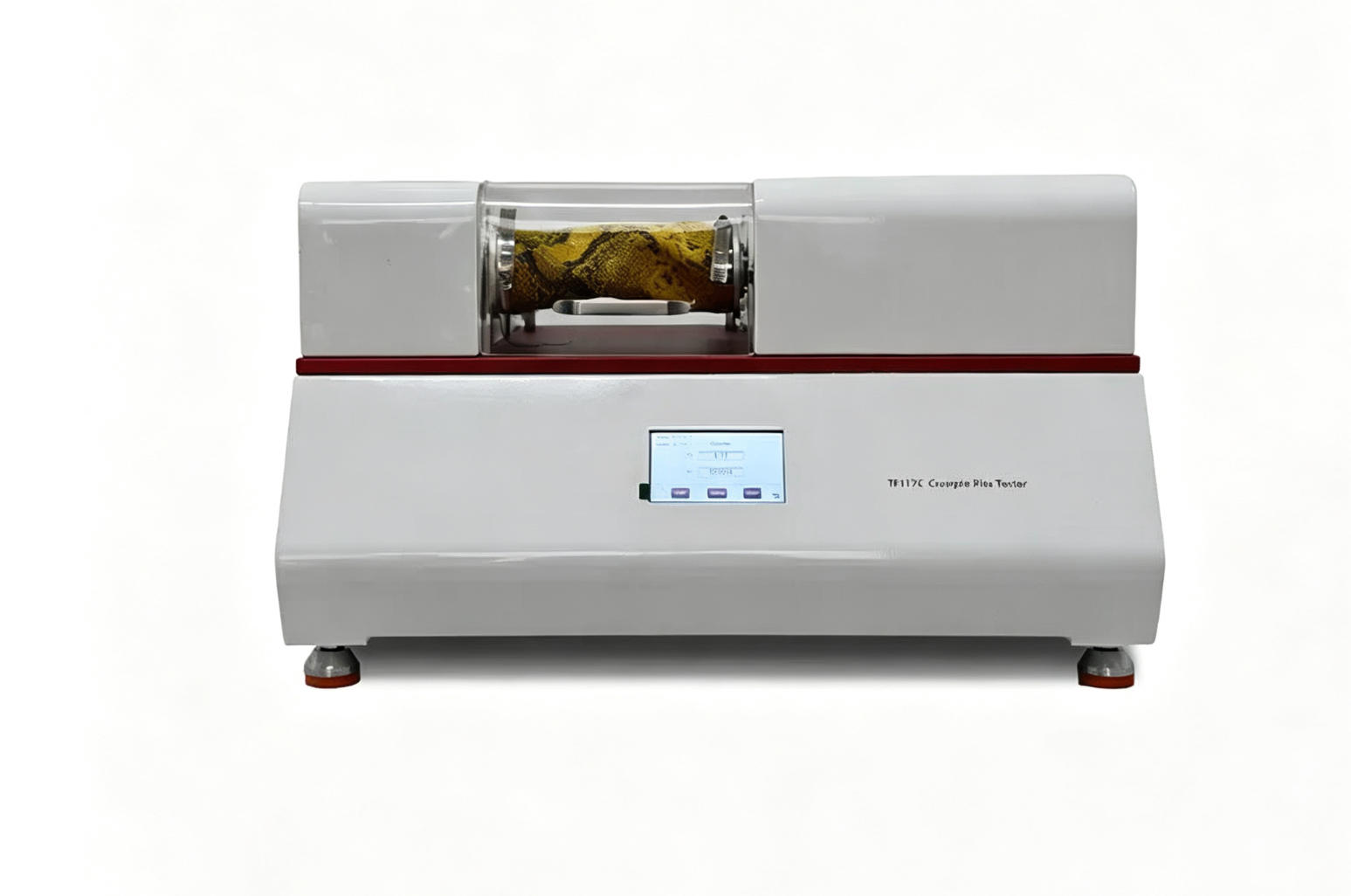 Crumple Flex Tester
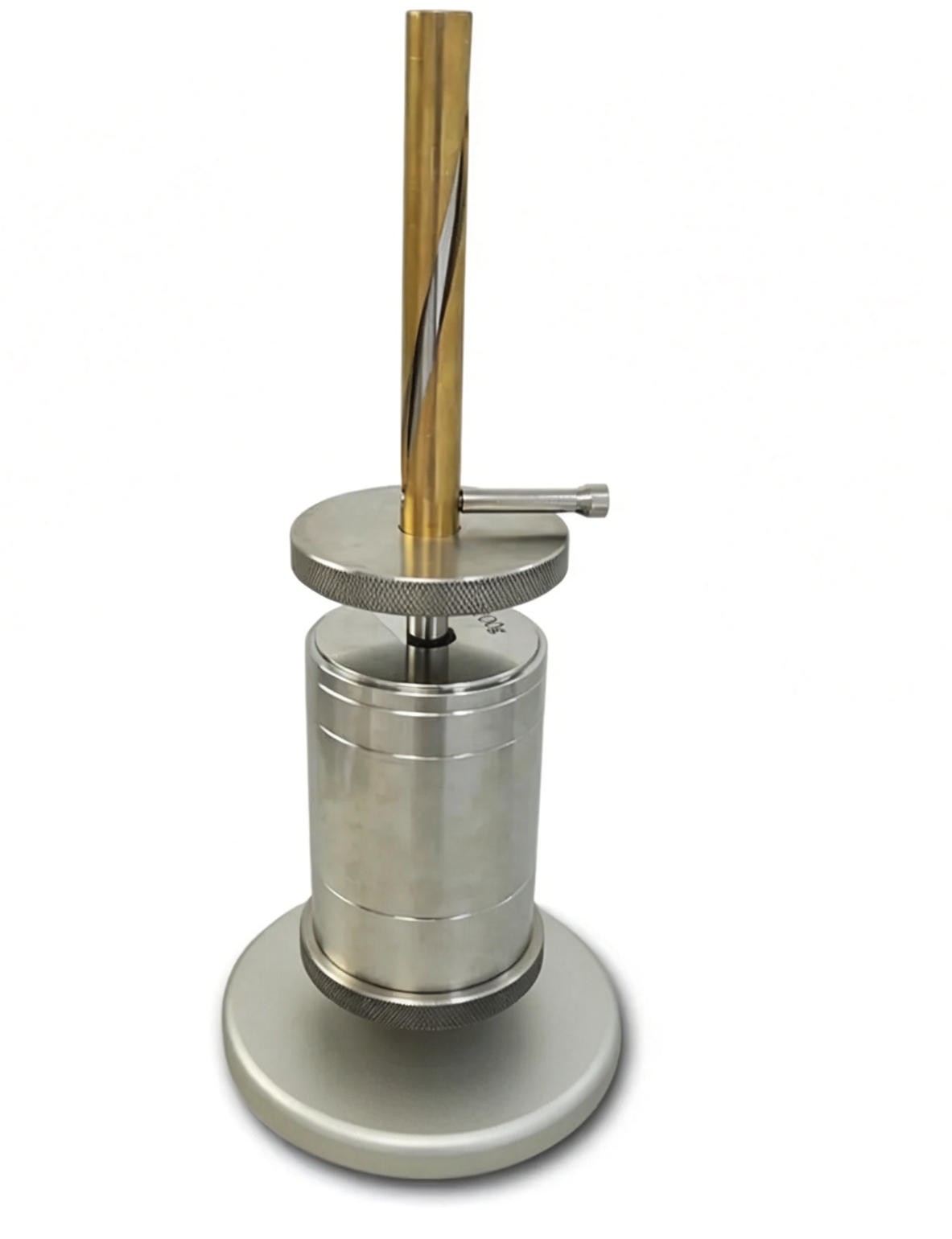 AATCC Wrinkle Recovery Tester
 Crease Recovery Tester
Why request a quotation from TONNY
Founded in 2012 with a 60-person design and assembly team and worldwide supply. No prices are published and no registration is required to read a specification.
Tell us what you need to test.
Send the test method and the material. We will match the model, attach its specification table and reply with a written quotation - no prices published, no registration.