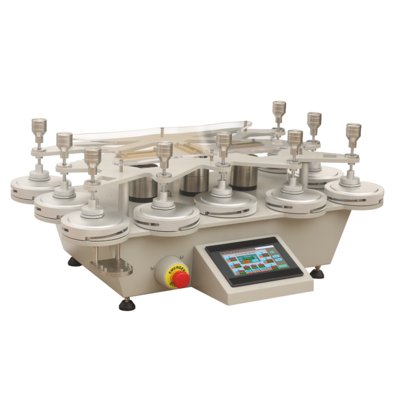
 Martindale Abrasion and Pilling Tester
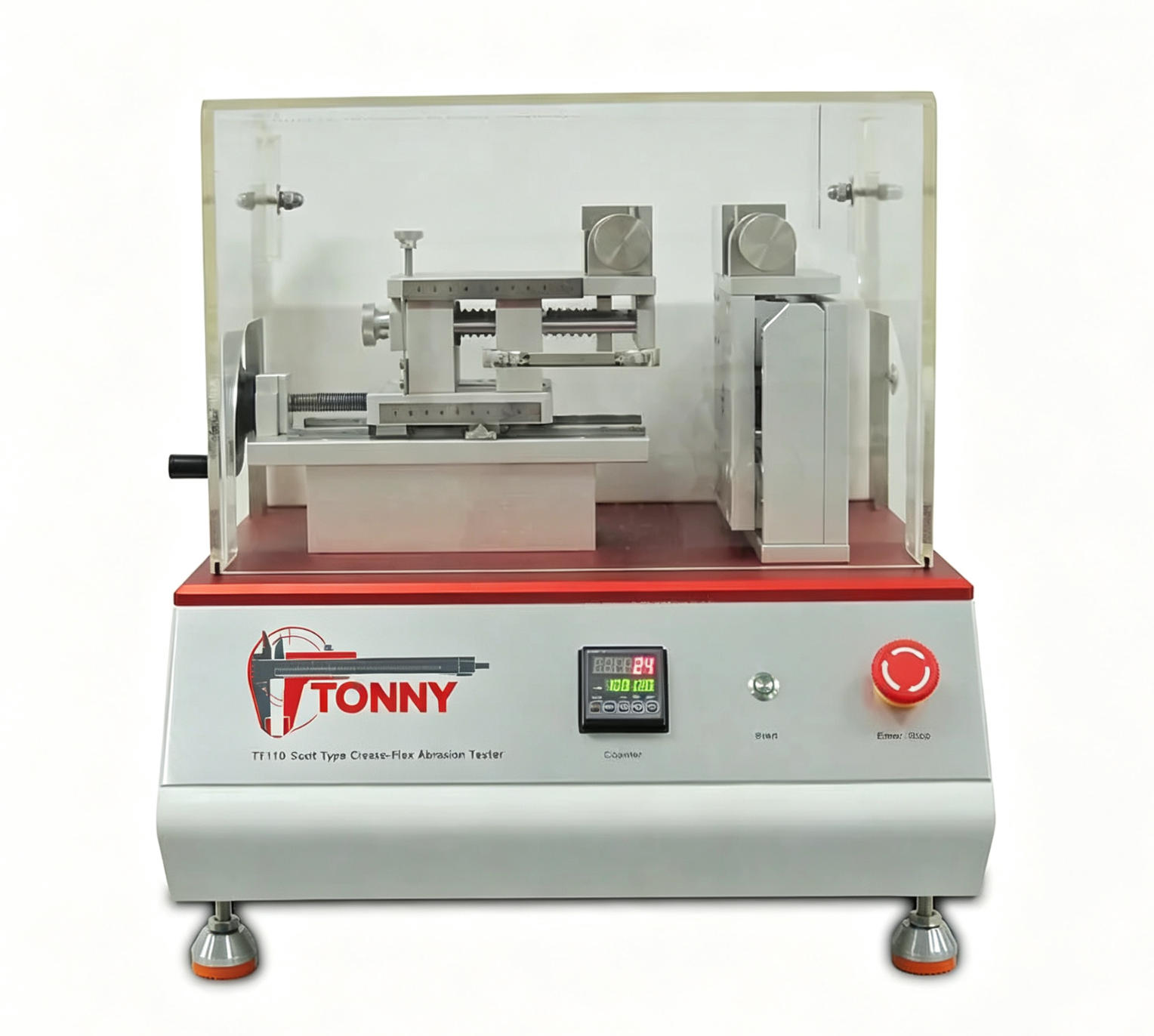
TNG1006
Scott Type Crease-Flex Abrasion Tester - TNG1006
The TNG1006 measures crease-flex abrasion resistance of materials such as leather, rubber, and cloth. It is used to assess the durability of automotive seat fabrics during manufacturing and normal use.
- Specifications
- 18
- Methods
- 0
- Images
- 5
- Supply
- Inquiry only
Inquiry only. No prices are published.
Product overview
The TNG1006 is designed to evaluate the crease-flex abrasion resistance of materials like leather, rubber, and cloth. It simulates the mechanical stress experienced by these materials during the production of automotive seat covers and throughout their operational life. The instrument operates by clamping two specimens in a cross shape and subjecting them to repeated crease-flex movements under controlled load and friction conditions. The test is suitable for woven fabrics without lamination or with laminates up to 5 mm thick. The adjustable pressure load, friction distance, and grip spacing allow customization based on the specimen's material properties. The test complies with standards such as GMW 3217. The specimen dimensions are 30x120 mm, with holders adjustable between 0–50 mm (standard: 30 mm). The friction speed is set at 120 ± 2 cpm, and the friction distance is adjustable between 0–60 mm (standard: 50 mm). The pressure load is 9.8 N, adjustable. The instrument has a length of 500 mm and a width of 580 mm. The test involves applying a spring-loaded force to the specimen while it undergoes reciprocal movement, and after reaching the specified number of cycles, the specimens are inspected for signs of damage such as cracks, wrinkles, or discolouration.
Application
Scott Type Crease-Flex Abrasion Tester, to determine the crease-flex abrasion resistance of leather, rubber cloth, etc. This test method is used to determine an automotive seat fabric’s resisitance to ravelling during seat cover manufacture and during normal vehicle life. This test is recommended for woven fabrics without lamination or with laminates up to 5 mm thick.
Clamp the two specimens in cross shape. Based on the various materials of the specimen, apply the appropriate load. The force loaded on specimen, distance between grips and the two-way distance can be adjustable. And the force loaded on specimen is of spring type. During the test, two specimens undergo crease abrasion and reciprocal movement. After reaching the specified number of abrasions, remove the test specimens and inspect them for cracks, wrinkles, or discolouration.
Technical description
- Specimen: 30x120mm
- Holders: 0~50mm(standard: 30mm)
- Pressure load: 9.8N (adjustable)
- Friction distance: 0~60mm(standard: 50mm)
- Friction speed: 120+/-2cpm
- Length: 500 mm
- Width: 580 mm
- Height: 350 mm
- Test Procedure
- 1 Prepare specimens of suitable size and condition them according to standard GMW 3221 code A.
- 2 Separate the jigs by (30 ± 3) mm and secure the specimen in the jigs.
- 3 Place the two sets of jigs together, ensuring that the loose fabric is only allowed to fold once on each side of the jig.
- 4 Perform 1000 tests at a speed of 120 cpm and a stroke length of 50 mm.
- 5 Test the other specimens in the same way.
- After the test, assess the specimen rating according to the table below.
- After 1000 cycles
- No apparent ravelling or yarn slippage in the fabric structure.
- Slight, non-objectionable ravelling and/or minimal yarn slippage in the fabric structure. No ravelled threads span the tested length.
- Moderate ravelling or yarn slippage with a maximum of one ravelled thread spanning the tested length.
- Significant ravelling or yarn slippage with a maximum of three ravelled threads spanning the tested length.
Test method notes
Test significance The Scott Type Crease-Flex Abrasion test determines the durability of the product by rubbing back and forth on the sample and then observing the degree of crack, wrinkles, or discoloration of the sample. Scott crease-flex test and Martindale abrasion test are used to testing the durability of textiles from different angles, so the combination of them can improve the stability of the test results. Differences between Martindale abrasion test and Scott Type abrasion test 1. Different testing methods: the Martindale abrasion test mainly implement friction between the tested sample and the specified substance, while the Scott Type crease-flex abrasion test is rubbed back and forth with the sample itself.
Specifications
| 78 kg | — |
|---|---|
| 220 V | 50/60 Hz |
| Length: 500 mm | Width: 580 mm |
| Rating | After 1000 cycles |
| 10 | No apparent ravelling or yarn slippage in the fabric structure. |
| 8 | Slight, non-objectionable ravelling and/or minimal yarn slippage in the fabric structure. No ravelled threads span the tested length. |
| 6 | Moderate ravelling or yarn slippage with a maximum of one ravelled thread spanning the tested length. |
| 4 | Significant ravelling or yarn slippage with a maximum of three ravelled threads spanning the tested length. |
| 2 | Excessive ravelling or yarn slippage with a maximum of five ravelled threads spanning the tested length. |
| Specimen | 30x120mm |
| Holders | 0~50mm(standard: 30mm) |
| Pressure load | 9.8N (adjustable) |
| Friction distance | 0~60mm(standard: 50mm) |
| Friction speed | 120+/-2cpm |
| Weight | 78 kg |
| Length | 500 mm |
| Width | 580 mm |
| Height | 350 mm |
Related instruments
Martindale Abrasion and Pilling Tester
 Wyzenbeek Abrasion Tester
 Universal Wear Tester
 TabWear Abrasion Tester
Why request a quotation from TONNY
Founded in 2012 with a 60-person design and assembly team and worldwide supply. No prices are published and no registration is required to read a specification.
Tell us what you need to test.
Send the test method and the material. We will match the model, attach its specification table and reply with a written quotation - no prices published, no registration.