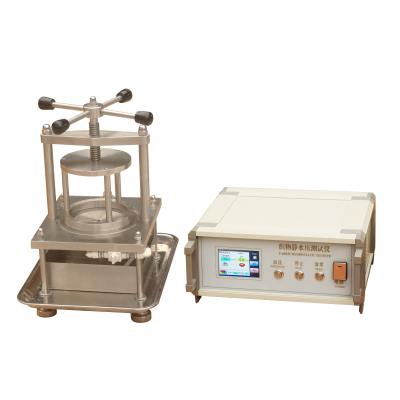
 Bursting Strength Tester
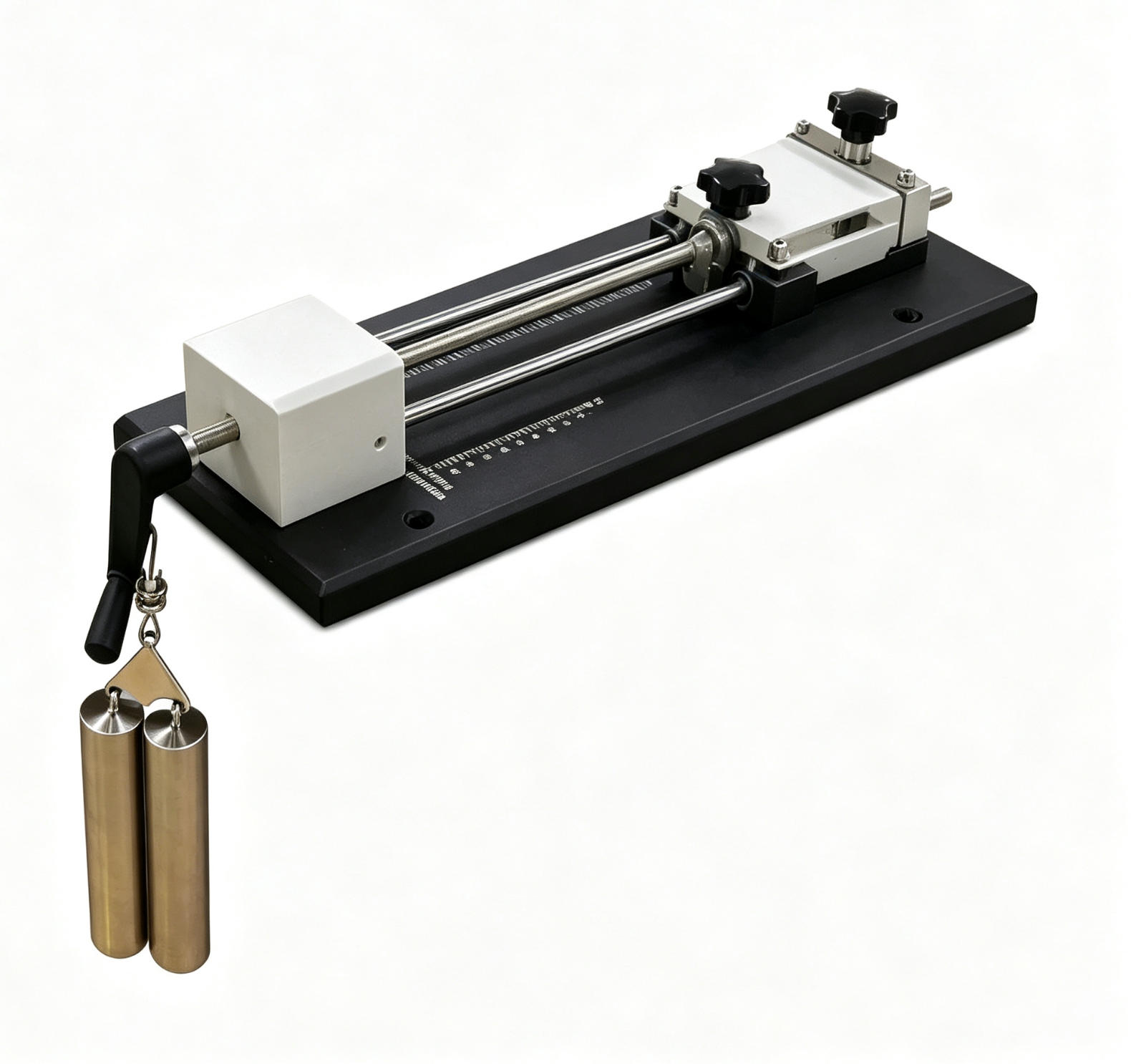
TNG1020
Fryma Fabric Extension Tester - TNG1020
The TNG1020 measures the stretch and recovery of textile fabrics. It is used to assess the elastic properties of knitted and woven materials in compliance with BS 4294.
- Specifications
- 7
- Methods
- 1
- Images
- 4
- Supply
- Inquiry only
Inquiry only. No prices are published.
Product overview
The TNG1020 is designed to determine the stretch and recovery characteristics of textile fabrics. The instrument applies a controlled force to a fabric sample, allowing for the measurement of elongation and subsequent recovery. It is suitable for woven, warp-knitted, and weft-knitted fabrics. The device complies with BS 4294. The apparatus includes a loading frame with clamps and a screw tensioning device, along with two 3 kg loading weights. Sample cutting templates are provided for preparing test specimens. The stretch rate for knitted fabrics is up to 300%, while woven fabrics exhibit a stretch rate of up to 50%. The dimensions of the instrument are 190 mm in length, 600 mm in width, and 100 mm in height. The TNG1020 is particularly suited for testing stretched fabrics produced through processes such as slack mercerisation or using bulked yarns.
Application
Fryma Fabric Extension Tester, to simply and economically determine the stretch and recovery of textile fabrics, both knitted and woven. More specifically, this Fryma Fabric Extension Tester is applicable to woven, warp-knitted, and weft-knitted fabrics. It is particularly suitable for stretched fabrics obtained through the use of fibers or bulked yarns, or through processes such as slack mercerisation.
Fryma fabric extensometer stretches fabrics with the utmost care and provides accurate stretch rates, clearly displayed on the tester’s scale. In addition, this apparatus consists of a loading frame with clamps and a screw tensioning device, two 3kg loading weights, and sample cutting templates.
Features
Longer service life: made of stainless steel for easy cleaning and long-lasting performance.
Testing data collection: Fryma fabric extensometer has a black base plate and white scale markings to facilitate observing and recording test results.
Meet various testing requirements: sample cutting templates are available in a variety of sizes for different types of testing.
The significance of testing tensile properties of fabrics
Knitted fabric or elastic woven fabric is easy to stretch by external force and then returned to the original shape of the trend behind the external force removed, which is called fabric tensile. A fabric of good tension or elasticity, most of them will shrink when the spread, often difficult to handle in cutting, sewing, ironing, and other operations, usually causes shrink or sew broken. Therefore, in order to ensure the quality of fabric sewing, we should select elastic stitches suitable to the tensile properties of the fabric when processing the above material, especially in sewing.
Technical description
- Loading weights 3 kg x 2 pcs
- Stretch rate of knitted 300%
- Stretch rate of Woven 50 %
- Length: 190 mm
- Width: 600 mm
- Height: 100 mm
Key features
- Longer service life: made of stainless steel for easy cleaning and long-lasting performance.
- Testing data collection: Fryma fabric extensometer has a black base plate and white scale markings to facilitate observing and recording test results.
- Meet various testing requirements: sample cutting templates are available in a variety of sizes for different types of testing.
Test method notes
Test principle Stretching a specimen with standard dimensions involves applying a specified load. After observing the extension, the tension is released. Following the recovery of the unstressed specimen, the length is measured. Test method Clamp the test sample. By rotating the shaft in the back anti-clockwise, the moving clamp is moved back to stretch the sample, so the stretch rate can be read directly on the scale, and both knitted fabrics and woven fabrics scales can be read. By pressing the knob on the right side, the moving clamp can be returned back to its initial position quickly. Test Procedure 1 See that the clamps are properly aligned and parallel. Woven fabrics. Set the clamps with their inside edges 200±1mm (8±0.05 in) apart (L1). Knitted fabrics. Set the clamps with their inside edges 75±0.5 mm (3±002 in) apart (L1).
Specifications
| 14.5 kg | — |
|---|---|
| BS 4294 | — |
| Weight | 14.5 kg |
| Standards | BS 4294 |
| Length | 190 mm |
| Width | 600 mm |
| Height | 100 mm |
Test standards supported
Each standard is matched to the instruments that support it.
Related instruments
Why request a quotation from TONNY
Founded in 2012 with a 60-person design and assembly team and worldwide supply. No prices are published and no registration is required to read a specification.
Tell us what you need to test.
Send the test method and the material. We will match the model, attach its specification table and reply with a written quotation - no prices published, no registration.